Install Solar
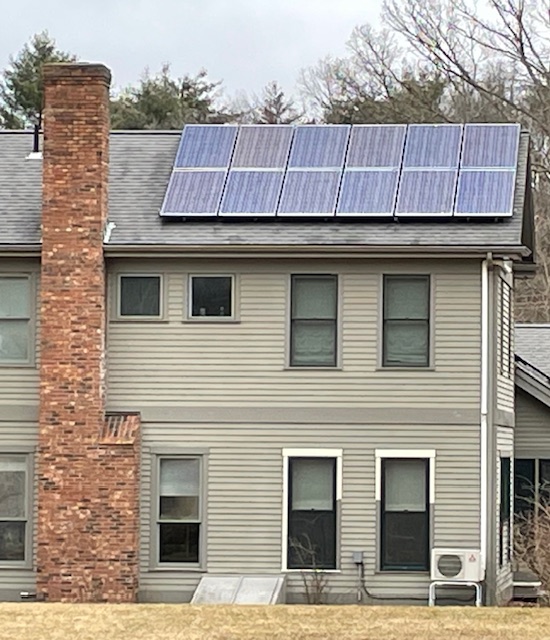
Summary: Create your own energy with solar panels.
Description
A primary strategy for combating climate change is to use clean electricity for both our current and future needs (e.g., electric vehicles and electric heat pumps). You can support this critical requirement by generating clean electricity at home with renewable rooftop solar. The rapid decrease in the cost of solar over the last ten years and local and state incentives, makes adding solar an attractive option. You will be helping the environment and also making a sound financial decision
As of this writing, March 2024, Stow residents have already installed solar on 115 homes. This is a good time to look into solar for your home.
For more information on solar, click Steps To Take and Deep Dive on the tabs above.
Deep Dive
Residential solar systems. Solar electric systems, also known as solar photovoltaics or solar PV, convert sunlight into electrical energy through an array of solar panels that connect to a home’s electrical system. Since a solar system uses sunlight to generate electricity, energy production will be highest at midday and cloudy weather will reduce production. Energy production from a solar system will be higher in the summer than in the winter, due to lower winter sunlight.
Is my roof good for solar? There are several factors to consider in determining whether your roof is a good fit for a solar installation. Beyond the items listed below, you should have your roof evaluated by a solar installer.
Orientation and shading. A south facing roof is best for solar production, although east and west facing roofs can also perform well. Minimal shading is also important for solar production. Hudson Light & Power Department (HLPD) solar rebate includes specific requirements for both orientation and shading. It is important to verify with a solar installer that your roof will both yield good solar production and qualify for the Hudson Light & Power Department rebate.
Roof area available for solar installation. Not only has the cost of solar panels declined over the years, the efficiency of individual panels has improved as well. This means for the same roof area, you can now get greater solar electric production than with the solar panels available a few years ago. Once you have determined the size of the solar system you want (this is measured in kW - kilowatts) and the efficiency of the solar panels, you can then determine if you have sufficient roof area for the system. Typical home rooftop solar installations range from 5 kW to 10 kW. As with orientation and shading, you should verify the required roof area with a solar installer.
Age of roof. Once installed, it can be costly to remove and replace a rooftop solar system. Since a solar system will run for 25 years or more, you should ensure your roof is in good condition and not due for replacement for many years before moving ahead with a solar installation. This can be done through a professional roof inspection or, if you know when the roof was installed, you can estimate the remaining lifetime.
Hudson Light & Power Department rules for solar It is important to recognize that the rules for solar installations vary between utilities. For Hudson Light & Power Department there are several requirements you should be aware of.
-
Leasing a solar system is not allowed. You must own the solar system and arrange financing through your solar installer or yourself.
-
The maximum size allowed for a residential solar system is 25 kW. As stated above, this limit is more than sufficient for a homeowner.
-
For solar electric production that is more than what your home is currently using (this will usually occur around midday), the excess electricity is fed back to the grid. Hudson Light & Power Department pays you what is called the “power adjustment charge”, which is about half your electric rate, for this excess production. (Note - this is different from some other utilities which may pay the full electric rate for excess power. This is called “net metering”).
-
Hudson Light & Power Department offers a generous rebate for solar. But to qualify for this incentive, the solar panels meet specified orientation and shading requirements.
For best results, work with a solar installer who is familiar with Hudson Light & Power Department’s solar rules.
Financials. The cost of installing solar has been declining. As of this writing (March 2024), the average cost of a rooftop solar system, charged by a solar installer, is between $2.75 and $3.25 per watt. And there are incentives available from Hudson Light & Power and the state government. Depending on the size and installer cost of the solar system, combining these incentives can reduce your final cost by 30%.
Consult the Clean Energy and Energy Efficiency Incentives page on the Town of Stow website for details.
Over the life of a solar system, your electricity savings will be two to three times the cost of the installation.
Selecting a solar installer. The process of going solar can seem complex, so you’ll want to hire the right professionals to make it easier. How do you choose a qualified solar installer who uses high-quality solar panels?
The quick answer is by researching and interviewing multiple installers. Here are some of the most important factors to consider. (This list is derived from an article from the U.S. Office of Energy Efficiency and Renewable Energy).
-
Credentials – Industry-standard certifications are awarded through organizations like the North American Board of Certified Energy Practitioners (NABCEP) which is recognized as the gold standard among renewable energy system installers. Make sure the installer you choose is licensed, bonded, and insured to install residential solar projects in your area. Ask if they will be using subcontractors on your project and verify the subcontractors’ credentials as well.
-
Credibility and Expertise – Seek out installers who have experience installing solar equipment and are knowledgeable about all aspects of the process. A good rule of thumb is to work with installers who have at least three years of experience. Ask them how long they’ve been in business and how many solar energy systems they’ve installed. In fact, ask a lot of questions, including: What modules do they use and why? Can they clearly explain which solar incentives you are eligible for and how they work? What can they tell you about coverage under warranties if there’s a problem with a component or the energy system after installation?
-
Transparency – There shouldn’t be any mystery about the work being done on your home; your installer should be upfront with you about the process and be willing to answer all your questions at any time. Further, if your installer uses subcontractors, make sure you know which portions of the project they will handle and what oversight your installer will provide.
-
Addressing Roof Conditions – When you hire an installer, one of the first things they should assess is your roof’s condition. Ask your installer if they recommend roof repair prior to installation. Also, make sure you are clear about who is responsible for roof damage that may occur or a roof leak if one develops. Most roofs have protruding vent pipes. Some installers will place the panels to fit around these vents, but you may not like how that looks. If you’re getting your roof repaired prior to installation and you have protruding vents, you can ask if the vents can be moved to a spot where there won’t be solar panels. If they can’t, ask your roofer about replacing protruding vent pipes with low-profile vent openings, which can fit underneath solar panels. Ask your installer to include any roof repairs and vent relocation in their proposal.
-
Reputation and Testimonials – Do your due diligence by reading online reviews from installers’ past customers. The installers you’re considering should be able to point you to previous clients who will share their installation experience. As you comparison-shop, the installers should demonstrate their ability to communicate clearly and help you understand how your system will work.
-
Talk to Friends and Neighbors – When in doubt about whom to trust in a crowded marketplace, reach out to people you know who have gone solar to find out what they learned from the experience. You may find that you have more confidence with direct feedback from a neighbor than scrolling through online reviews.
-
Pricing – Installers are likely to have different rates for the same job, so comparing quotes from multiple installers is important. Most experienced installers will come look at your home and then give you a price proposal based on your home’s size, energy usage, and other factors. For an idea of what you might pay, the Lawrence Berkeley National Laboratory’s Tracking the Sun report contains installation prices across the United States. To compare, convert your quote to cost per watt. You can calculate this by dividing the cost of the system by the system’s capacity in watts. Since capacity is measured in kilowatts(kW), multiply the number of kW in the system by 1,000, then divide the system’s cost by that number.
Maintaining a solar system. Your solar system should be mostly maintenance free over its 25+ year life. Rain and snow will generally keep the panels clean and free of debris. Removing snow is not recommended since you risk damaging the panels.
Household use of electricity with a solar system. It is not necessary to change your household use of electricity after installing a solar system. However, since Hudson Light & Power Department pays you only about half the retail cost of electricity for excess power sent back to the grid, you may want to minimize excess production by maximizing use of electricity during the period of peak electric production from your solar system. For example, you could run a clothes washer and dryer at midday.
Storage for a solar system. It is possible to include or add battery storage to your solar system. The benefit of storage is that, when properly sized, it enables you to use practically all the electricity generated by the solar system - the excess electricity generated around midday will be stored and used in your house when the sun isn’t shining. Storage provides a backup source of electricity if there is an electrical outage.
However battery storage is expensive and at current prices, a battery storage system may not be financially beneficial.
References
Mass Clean Energy Center - Solar Electricity
Stow Clean Energy and Energy Efficiency Incentives
Steps to Take
Step 1: Determine if your roof is good for solar. This includes orientation and shading as well as the roof area required and the condition of the roof. See Deep Dive for more details around orientation and shading requirements.
Step 2: Find an experienced and reliable solar installer who is familiar with the solar requirements and incentives for Stow. Rooftop solar is not a Do It Yourself (DIY) project.
Step 3: The installer will help to determine the size of your solar system. This will depend on your electric use, available rooftop area, and projected financials after calculating available incentives. It is a good idea to get more than one quote.
Step 4: Let us know how it went! Contribute your story under the testimonials tab.
For more details on the steps below, see the solar Deep Dive tab.
- All Actions